Colored
 Grayscale



The exhibition of Final Design Projects "Design 3" for the Department of Architecture students at the College of Architecture was held at the Kuwait National Library, in collaboration with the Pan Arab Consulting Engineers (PACE). This initiative aimed to enhance integration between academic education and professional practice, and to highlight the role of architecture as an effective cultural and research tool within society.
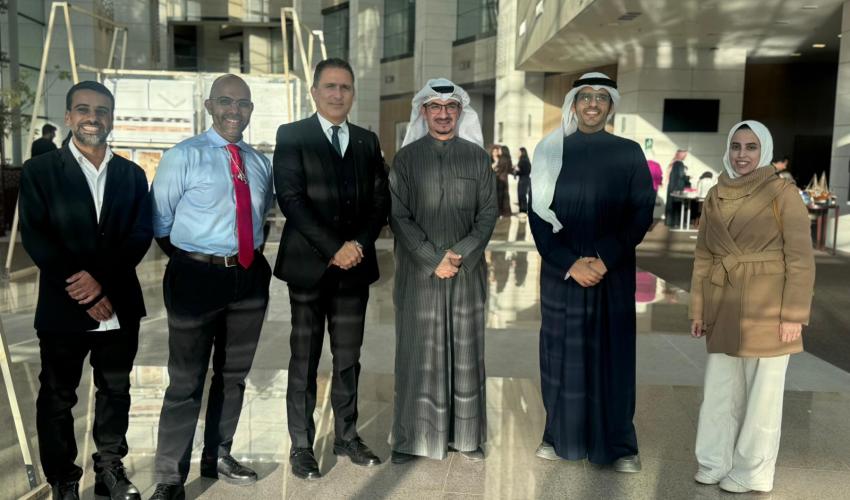
The exhibition was supervised by Dr. Sulaiman Al-Othman and architect Mohammad Khasroh, and was attended by the Acting Dean of the College of Architecture, Dr. Adel Al-Mumen, along with the Chief Executive Officer of PACE, Eng. Tareq Shuaib, as well as a distinguished group of academics, architects, and architecture enthusiasts.
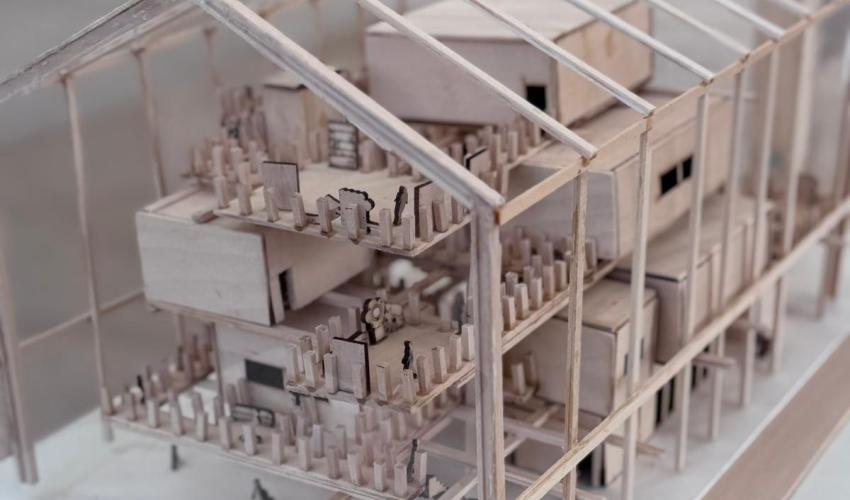
The showcased projects focused on exploring the potential of mass timber construction, particularly cross-laminated timber (CLT) and glulam, as design and structural materials capable of generating contemporary architectural forms and new spatial experiences. This approach constituted an advanced research experience for the students, given the limited local use of these materials, providing them with an opportunity to rethink conventional structural systems and develop innovative alternatives.
The students selected a children’s library as the design project, considering it a cultural and educational space at a human scale that allows for architectural experimentation and exploration of the relationship between materiality, structure, and the user’s sensory experience. The architectural solutions varied between frame systems, panel systems, or hybrid approaches, while employing digital design tools to produce forms and spaces characterized by flexibility, structural clarity, and expressive impact.
The projects reflected a high level of creativity and architectural awareness among the students, as the proposals went beyond formal expression to address deeper concepts related to sustainability, spatial experience, and the role of architecture in shaping interactive and stimulating educational environments for children.
Faculty members evaluated the projects and engaged in discussions with the students regarding their ideas and design methodologies, with the participation of Eng. Tareq Shuaib, who provided valuable professional feedback and contributed his practical expertise to bridging academic work with the demands of professional practice.
The exhibition underscores the importance of openness to contemporary construction materials and techniques, as well as the role of architectural education in preparing a conscious generation capable of research, experimentation, and the delivery of innovative design solutions. It also reflects the success of collaboration between academic institutions and professional firms in enriching the educational experience and supporting students in developing architectural visions that contribute to shaping the future of architecture locally and regionally.